Need stump grinding services in Avon?
Tell us about your tree, add a few photos and request an estimate. A provider in our network can follow up with you.
No obligation
Request your stump estimate
A leftover stump is easy to ignore until it trips someone, dulls a mower blade, or starts to rot. Stump grinding shaves the wood down below the soil line, so your yard goes back to being flat, safe and usable.
Protectioncontribute Tree Service is a referral service. We do not grind stumps ourselves. We share plain, hands-on tips for getting your yard ready, then connect you with independent providers in our network. Take a few photos, jot down the stump size, and request an estimate. Each provider sets its own pricing and schedule, so you can compare written quotes before you decide anything.
A stump looks harmless. Then someone trips on it, a mower blade bends, or mushrooms pop up around it. Stump grinding fixes all of that. A grinder shaves the stump below the soil line and turns the wood into chips.
Protectioncontribute Tree Service is a referral service. We do not run the grinder. We connect you with independent providers in our network who do.
After a hard thunderstorm, a snapped trunk base can sit split and sharp. Stay back, snap photos. Look from a distance for leaning trunks, hanging limbs and cracks.
Storm tree clearance comes first. Grinding comes after the tree and debris are gone. If a tree is still down or leaning, that is emergency tree removal work, not a grinding job. Some policies may cover sudden storm damage, so check your policy. Providers can often help document damage for a claim.
Look up before you look down. If any line touches a tree or the ground near it, keep everyone away and treat it as live. Contact the utility company, not a neighbor with a saw. A grinder should not start until lines and buried utilities are sorted out.
Stumps hide in tall grass. Kids, pets and guests catch their toes on them. Mowers hit them hard. A ground-down stump sits level with the lawn.
Rotting wood can attract insects such as ants and termites. Many stumps also send up new shoots. Grinding removes most of the wood that feeds both problems.
Deep frost and spring flooding move soil around. Old roots rot and leave gaps, so the ground can sink. If a stump sits close to a foundation, walkout or sump discharge line, mention it. Tell the provider about any pipes or drain tile nearby, too.
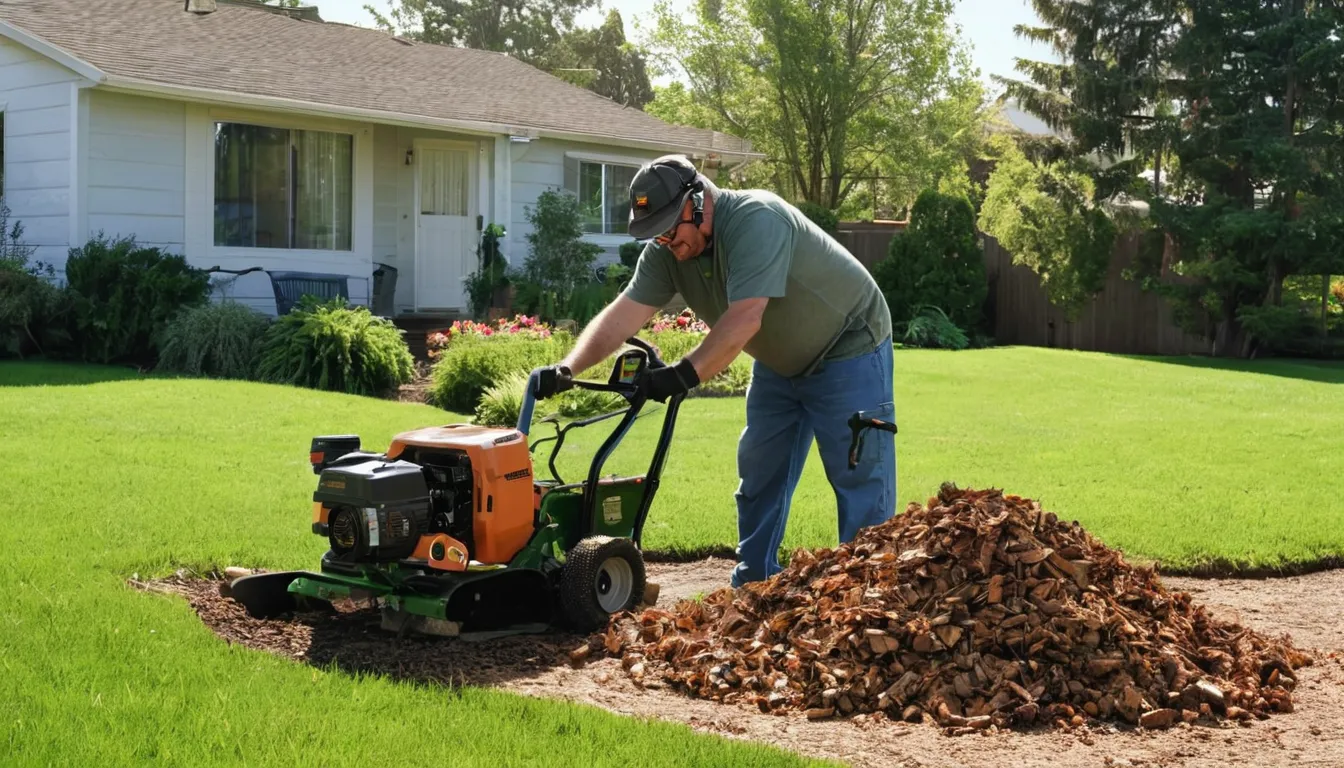
A provider rolls a grinder up to the stump. A spinning wheel with hard teeth sweeps side to side and chews the wood a few inches at a time. Many providers grind several inches below the surface. Some go deeper if you plan to plant a new tree there.
You end up with a mound of chips mixed with soil. You can spread the chips as mulch, use them to fill the hole, or ask the provider to haul them off. Ask which one the quote covers before the job.
Grinding leaves the roots in the ground to rot slowly. Full removal digs out the stump and the big roots. It usually costs more and tears up more yard.
Grinding suits most lawns and garden beds. Full removal may make sense if you plan a slab, a footing or a new building. Tell the provider your plans, and they can suggest which fits.
Stump width matters most, and many providers price by diameter. Hardwood, exposed roots, rocks, tight gates and several stumps in one visit all change the number. Typical U.S. ranges are in the table on this page. Every job differs, so get a written quote.
Walk the yard with a notepad. Then do these hands-on jobs:
Take photos from three sides, plus one wide shot with the house in view. Write down the size, the tree type if you know it, and anything close by. Ready for the estimate means fewer surprises when providers quote.
A stump from a tree cut years ago can still be ground. Old wood is often softer, but it can hide rocks, nails or old fence wire. Tell the provider what you know. Quotes still vary, so ask for one in writing.
Mix chips with soil, tamp it down, and top it off with extra soil. Expect some settling over a season. In heavy clay or flood-prone spots, watch for pooling water.
Rake out some chips before you seed, because fresh chips can rob nearby soil of nitrogen. Then seed or lay sod. If small sprouts appear from old roots, clip them off.
Send your photos and stump size with your request, and a local provider can follow up.
Request a callback to check provider availability in your area.
Providers shave the stump below the soil line so you can mow right over it.
Many providers can also grind exposed surface roots that stick up near the stump.
Ask whether chips stay as mulch, fill the hole, or get hauled away after grinding.
Providers can review access, gates and nearby lines before the grinder starts up.
Prices depend on stump width, wood type, roots and access. These are typical U.S. ranges only. Real quotes vary by job, so ask each provider for a written quote.
| Item | Typical range | Notes |
|---|---|---|
| Small stump (under 12 in.) | $75 – $200 | Easy access keeps the price toward the low end of this range |
| Medium stump (12–24 in.) | $150 – $400 | Most yard stumps land here |
| Large stump (over 24 in.) | $300 – $800 | Wide hardwood stumps take more time |
| Exposed roots | $50 – $300 extra | Depends on how many roots and how thick |
| Chip hauling or fill-in | $50 – $250 | Often optional; confirm what the quote includes |
| Full stump removal | $300 – $1,500 | Digs out roots too; costs more than grinding |
Take shots from three sides and one wide view. Stay back from any leaning trees or wires.
Note the width, how many stumps, and any pipes or gates nearby.
Send your photos and notes through the form. No obligation to book anyone.
Review written quotes from providers, ask your questions, then pick the one that fits.
Removing trip hazards helps kids, pets and guests move across the lawn with fewer worries.
Less rotting wood means fewer bugs near your home.
No more bent blades or lawn patches you have to dodge.
Level ground can take new grass, a garden bed or a patio.
Tell us about your tree, add a few photos and request an estimate. A provider in our network can follow up with you.
Most single stumps take under an hour, though large hardwoods, thick roots or tight access can add time. The provider can give you a better idea after seeing your photos and notes.
You can rent a grinder, but it is heavy, loud and risky. Flying chips, hidden rocks and buried lines add danger. Many homeowners find it safer to leave it to a local provider.
The roots stay underground and slowly rot over several years. Most lawns and garden beds do fine with that. If you plan to build there, ask about full stump removal instead.
Tell us about your tree, add a few photos and request an estimate. A provider in our network can follow up with you.
No obligation